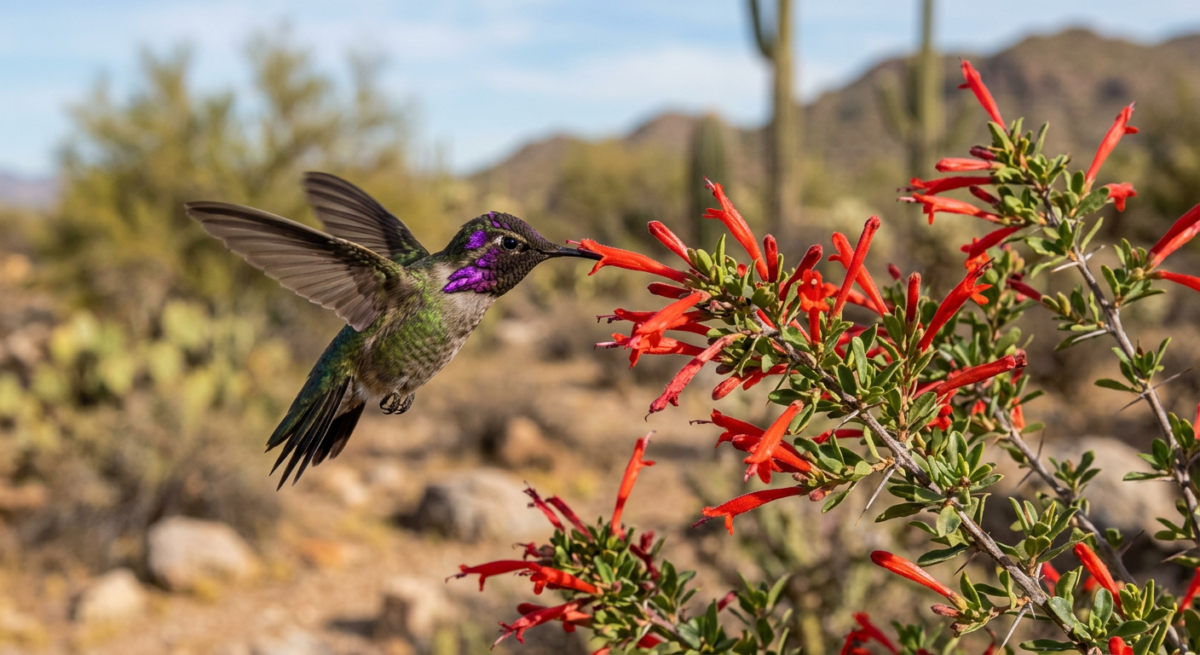
Hummingbirds, like the Costa’s hummingbird, above, are always welcomed in my desert garden. They dart from flower to flower, flashing brilliant, iridescent colors as they go—tiny, tireless pollinators that bring constant motion and life to the landscape.
Moving northward, but still here
Lately, however, their presence seems less frequent. Some experts suggest that shifting climate patterns are influencing birds’ home ranges as well as migration, with many species gradually moving north as temperatures rise. Still, hummingbirds have by no means disappeared from the Sonoran Desert. That realization inspired me to make my garden more supportive of their needs by incorporating drought-tolerant, nectar-rich plants that thrive in our arid climate.
If you’d like to attract hummingbirds to your own desert garden, consider adding the following plants.
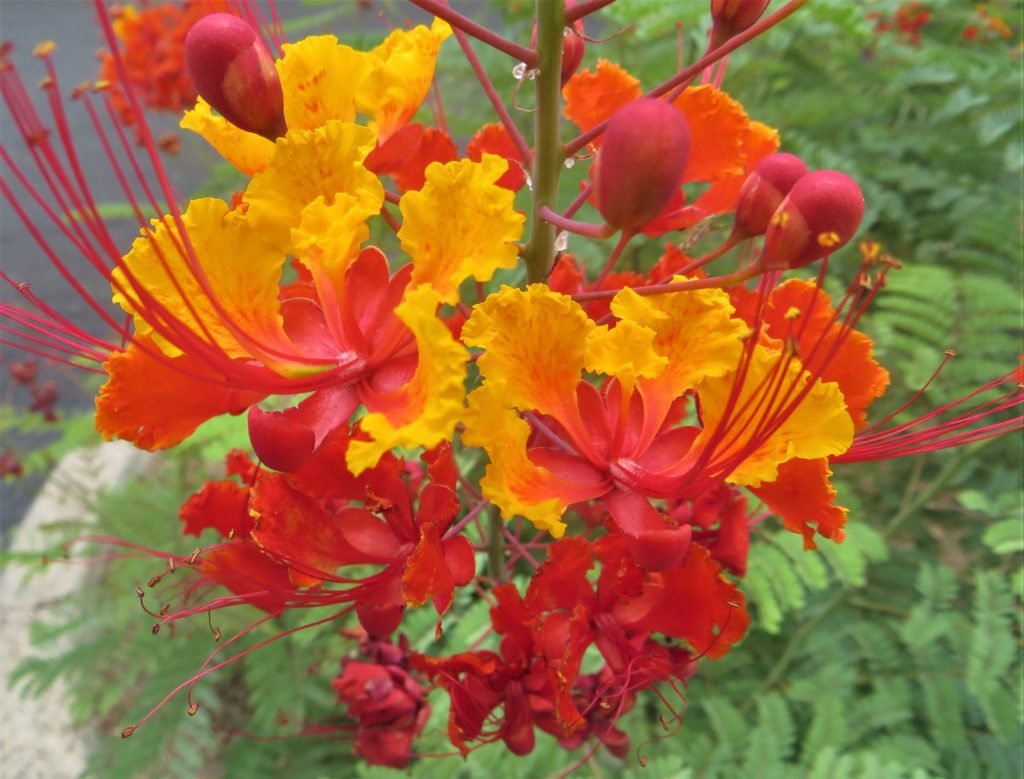
• Red Bird of Paradise (Caesalpinia pulcherrima)
A fast-growing, heat-loving shrub with bold, colorful flowers.
• Hummingbird Trumpet (Epilobium canum)
A classic choice, prized for its brilliant red blooms and strong appeal to hummingbirds.

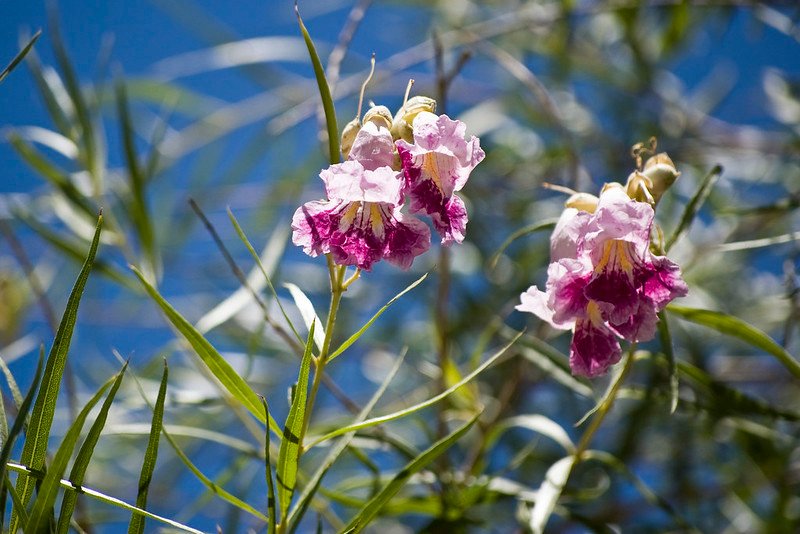
• Desert Willow (Chilopsis linearis)
A small, graceful tree with trumpet-shaped, orchid-like blooms that appear from late spring through fall—an extended feeding season for hummingbirds.
• Firecracker Penstemon (Penstemon eatonii)
One of the earliest bloomers, producing vivid red tubular flowers in spring when food sources can be scarce.

• Autumn Sage (Salvia greggii)
A hardy, low-maintenance shrub that offers nectar-rich blooms from late spring well into fall. It looks somewhat similar to the Penstemon, above, but with a longer blooming period, it can feed hummingbirds through summer heat.

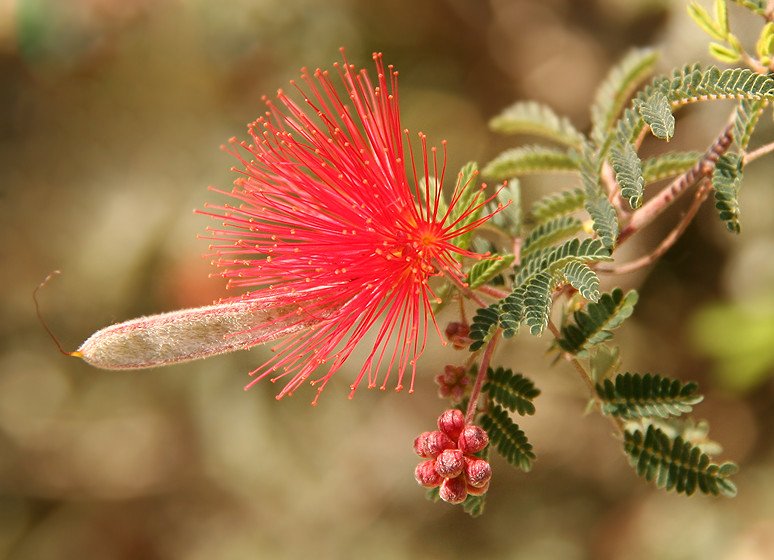
• Baja Fairy Duster (Calliandra californica)
Known for its soft, brush-like red flowers that hummingbirds find irresistible, they are cousins to the sturdy, and much taller, red bottle brush.
• Ocotillo (Fouquieria splendens)
A striking desert plant with tall canes topped by clusters of bright red flowers in a very short-blooming season in spring. No photo necessary: it looks like a bunch of dry sticks pointing skyward most of the year.
• Desert Honeysuckle (Justicia spicigera)
A dependable shrub, below, with vibrant orange tubular blooms that hummingbirds frequent.

• Globemallow (Sphaeralcea ambigua) A rugged desert native with soft orange blooms and excellent drought tolerance.

By choosing plants that bloom at different times of the year, you can provide a continuous source of nectar and create a welcoming habitat for hummingbirds throughout the seasons. Even in the desert, a thoughtfully planted garden can become a reliable refuge for these amazing birds.
If you live in Southern California, take a look at this post I wrote a while ago about hummingbirds in a somewhat different climate. There I mentioned citrus outside my kitchen window. Here, in the Sonoran desert, I look out the kitchen window to a Mexican Yellow Oleander (Cascabela thevetia, formerly Thevetia peruviana.) which the hummingbirds love, but every part of this plant in poisonous for humans. A previous resident planted it not realizing how dangerous it is. Even cutting it back and/or removing it has risks! (The lemon tree I saw from my window in California was a much much better choice!)
As the heat comes upon us, make sure your plants get watered regularly, but do NOT feed them to try to make them bloom or grow. Just a little bit of food to keep them alive until the weather cools. They are now going into summer hibernation and will wake up in the Fall.
And, finally, if you decide to install a hummingbird feeder, be aware that you should clean it EVERY DAY! Hummingbirds clustering at feeders spread diseases.