
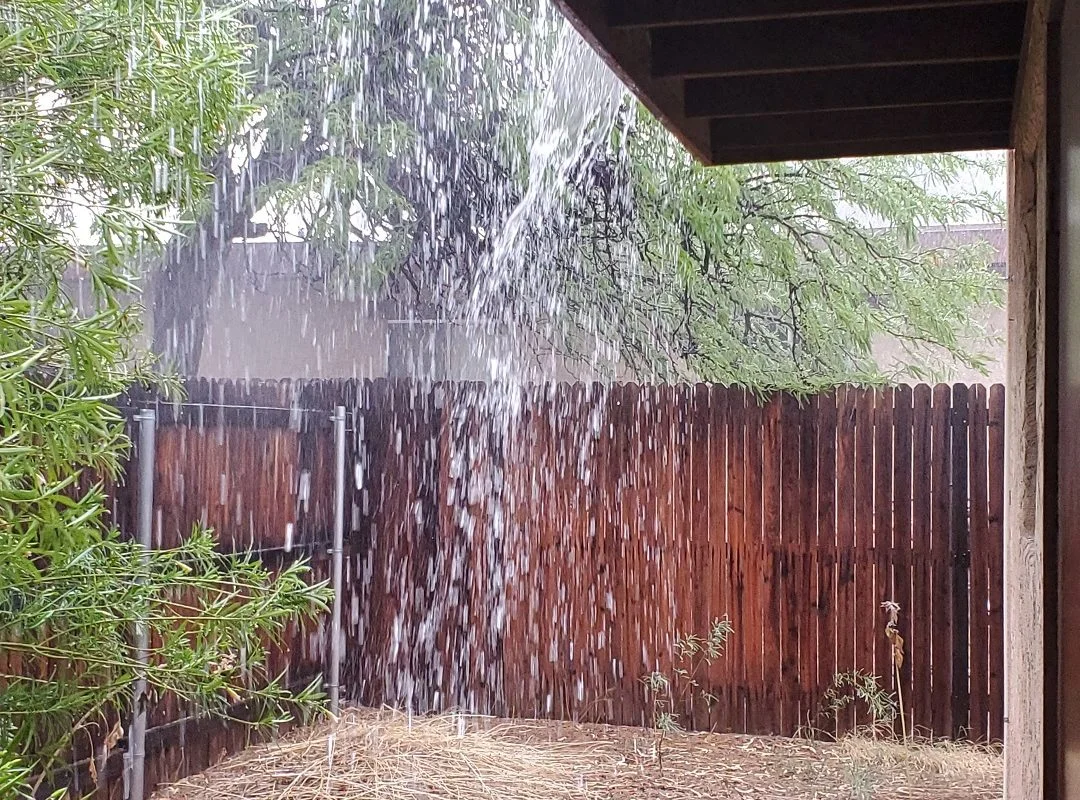
Maybe you think “Yipee. Summer rains are here. My plants are going to get plenty of water and I can stop irrigating my garden now.” You may be surprised to learn that even a soaking monsoon downpour may not be enough to keep your plants thriving at this time of year. Because, as we all know, blistering heat comes every day, relentlessly dehydrating plants–even tough desert natives–and drawing moisture from the soil. Meanwhile monsoon rains come and go irregularly, so they are watering your plants irregularly.
So here are our suggestions to keep your garden in good health this summer, starting with watering.
1. Water Deeply
Shallow watering is one of the biggest mistakes in hot climates. It leads to weak roots that are close to the soil’s surface. That, in turn, means that the roots are being “cooked” even though they are below ground. They can’t survive the heat.
Instead, water deeply so moisture reaches at least 4 to 6 inches — 12 inches is even better–into the soil. Water early in the morning; before sunrise is best. Watering during the night can lead to plant damage from fungus, powdery mildew or other plant diseases, so avoid it.
If you have space, build shallow basins around trees and shrubs to capture rainfall and let it soak into the ground. More about that here.
2. Take the Screwdriver Test
A technique I learned during Master Gardener training was to plunge a screwdriver into the soil around plants. (Be careful and don’t damage the roots!) If the screwdriver goes 4 to 6 inches into the ground easily, your soil is probably moist enough to keep your plants alive.
You could also buy an inexpensive soil moisture test kit like this one. (I haven’t used it but it is a bestseller on Amazon.)
3. Use Organic Mulch to Keep Soil Cool and Moist
You may have mulched your flower beds and around shrubs and trees earlier this year, but mid-summer is a good time to add more because the earlier layer may be thinning out by now.
A good thick layer of mulch lowers the soil temperature by 10 to 20 degrees Fahrenheit and significantly reduces evaporation. So add enough now to have 2 to 4 inches of organic mulch such as wood chips, straw, or shredded leaves. Keep mulch away from plant stems to prevent rot.
Good organic mulch also slowly releases nutrients into the soil which is ideal for this time of year. Do not heavily fertilize plants during summer; they don’t want to grow — just survive. They hunker down and go into “plant hibernation.”
4. Improve Soil Drainage Before Heavy Rains
There is a reason why ‘Flash Flood’ notices show up on your phone: monsoon downpours are so intense that the rain just skids off the hardened surface of the earth then rolls and rushes downhill, tearing up plants, rocks, boulders, and carrying a lot of that debris with it.
While floods can be huge and frightening in the canyons and dry washes, smaller floods could occur in your back yard and create serious damage. A heavy rainstorm can sweep away flower beds, lift stepping stones, uplift your patio and even damage the foundation of your home.
So, during the next monsoon storm go outside and see where rainwater is pooling around your home and where it is rushing away. It is a good idea to be sure the water that runs off your roof or falls anywhere on your property is properly channeled away from your house.
OR…you can save water in cisterns or barrels to be used to water your plants between storms. Read this post for details about saving rainfall on your property.
5. Provide Shade for Heat-Sensitive Plants and People
Even sun-loving plants can struggle in extreme desert heat which is why you should have tall trees in your yard. A leafy tree can reduce the temperature in your garden by 10 to 20 degrees Fahrenheit.
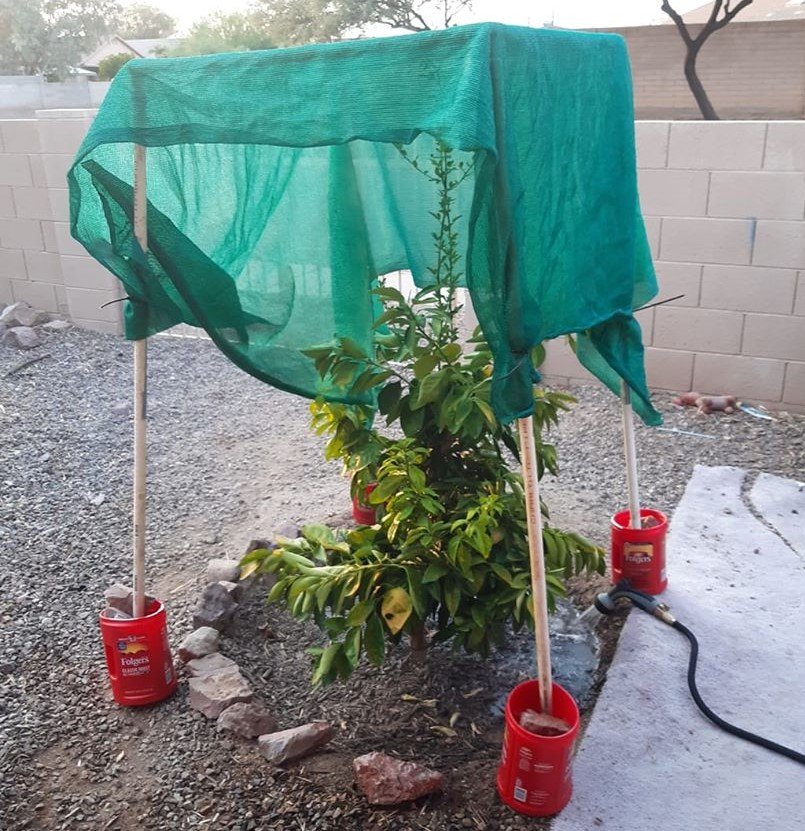
Another way to protect your plants is by using shade cloth over your raised bed vegetable garden and over your patio. To protect plants use a 30% to 50% shade cloth. To protect humans on a patio, a 70% to 90% shade cloth is better.
If your plants wilt during the day then recover in the evening, focus on cooling strategies—not extra watering.
Keeping your garden alive in extreme heat is all about strategy. By combining deep watering techniques, mulching, shade protection, and smart monsoon irrigation practices, you can protect your plants during the toughest part of the year.
Remember: summer is about survival—but with the right care, your garden will be ready to thrive when cooler temperatures–below 90 degrees Fahrenheit–return in the Fall.
Visit my author’s site to see books I’ve published.
All are now on Kindle Unlimited.
