
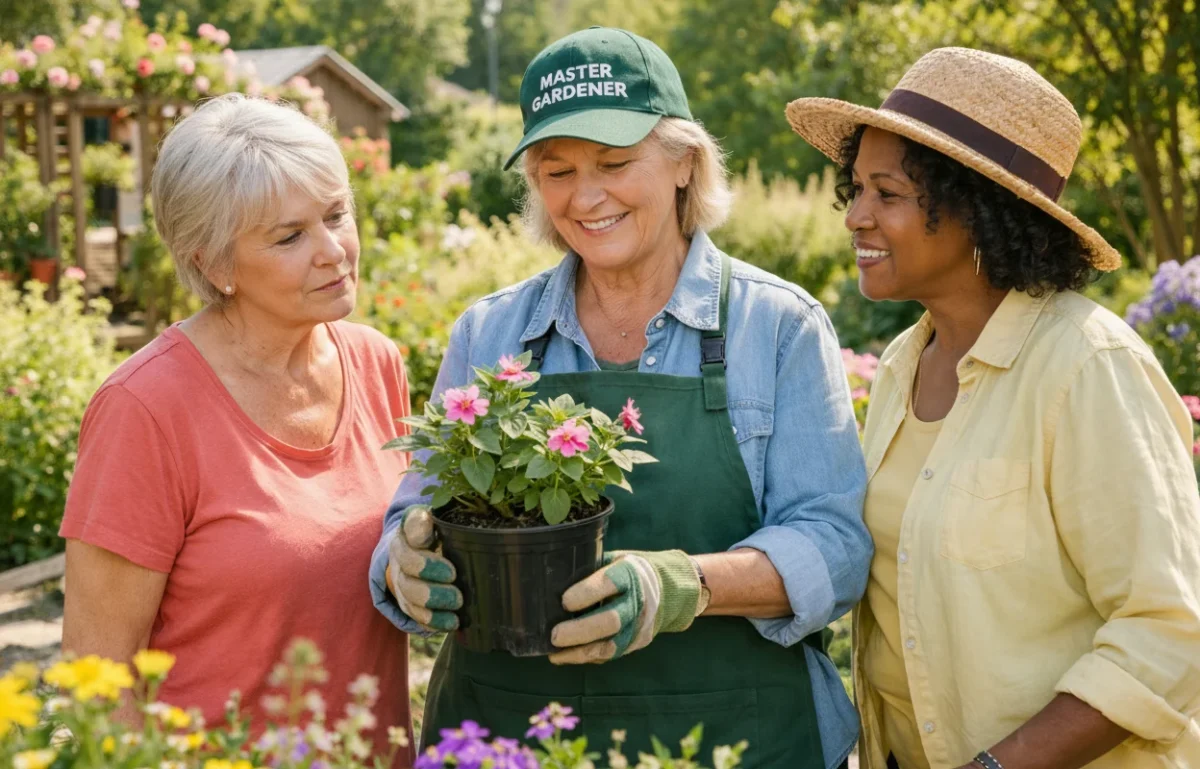
Many people think you already need to be an expert to join the Master Gardener program, but that is a major misconception. Whether your current garden is a sprawling oasis or just a few succulents in terra cotta pots on your patio, the program is designed to train you from scratch.
At its core, being a Master Gardener is about education and community. If you love gardening, want to learn from great teaching gardeners, and are willing to share your new gardening know-how with your neighbors, you are a perfect candidate.
Cultivating a Legacy: How the Program Began
The Master Gardener concept was born in 1973 in Tacoma, Washington State. Dr. David Gibby of the Washington State Cooperative Extension noticed a massive shift: homeowners were flooding local agricultural extension offices with urban horticulture questions.
Historically, Co-op Extension offices only served commercial farmers by giving them advice on how to make their farms more successful. Suddenly, they were being asked about which roses produced the longest-blooming flowers, how to get rid of tomato pests, and what to plant for a hedge in a specific neighborhood.
Instead of hiring more government staff, Gibby created a volunteer training program. These trained volunteers could then step up to answer community questions, plant demonstration gardens, and teach local classes to adults and, much later, to children in schools.
As the Master Gardener program spread nationally, the training changed to adapt to local conditions. Suggestions for the best pink rhododendrons may be great for Washington state, but best blooming cacti is a more pertinent topic for the Sonoran desert conditions of southern Arizona.
Another major change: As time went on, local Master Gardener programs became part of state Universities, rather than the state agricultural Co-op Extension offices.
Surviving Master Gardener Training
Master Gardener training is highly localized, intensive, and incredibly rewarding. I took the multi-month training program in Clark County (Las Vegas), Nevada. Having previously gardened in the lush, coastal climate of Santa Barbara, California, transitioning to the Mojave Desert required learning a completely new set of rules.
In the desert, you learn to work with the environment rather than trying to make it conform to your dream garden. The training dives deep into:
- Soil composition: Managing rock-hard caliche and alkaline desert soils.
- Water management: Capturing rainfall and mastering drip irrigation as well as efficient xeriscaping.
- Plant selection: Identifying native and desert-adapted species that thrive in intense heat with low rainfall.
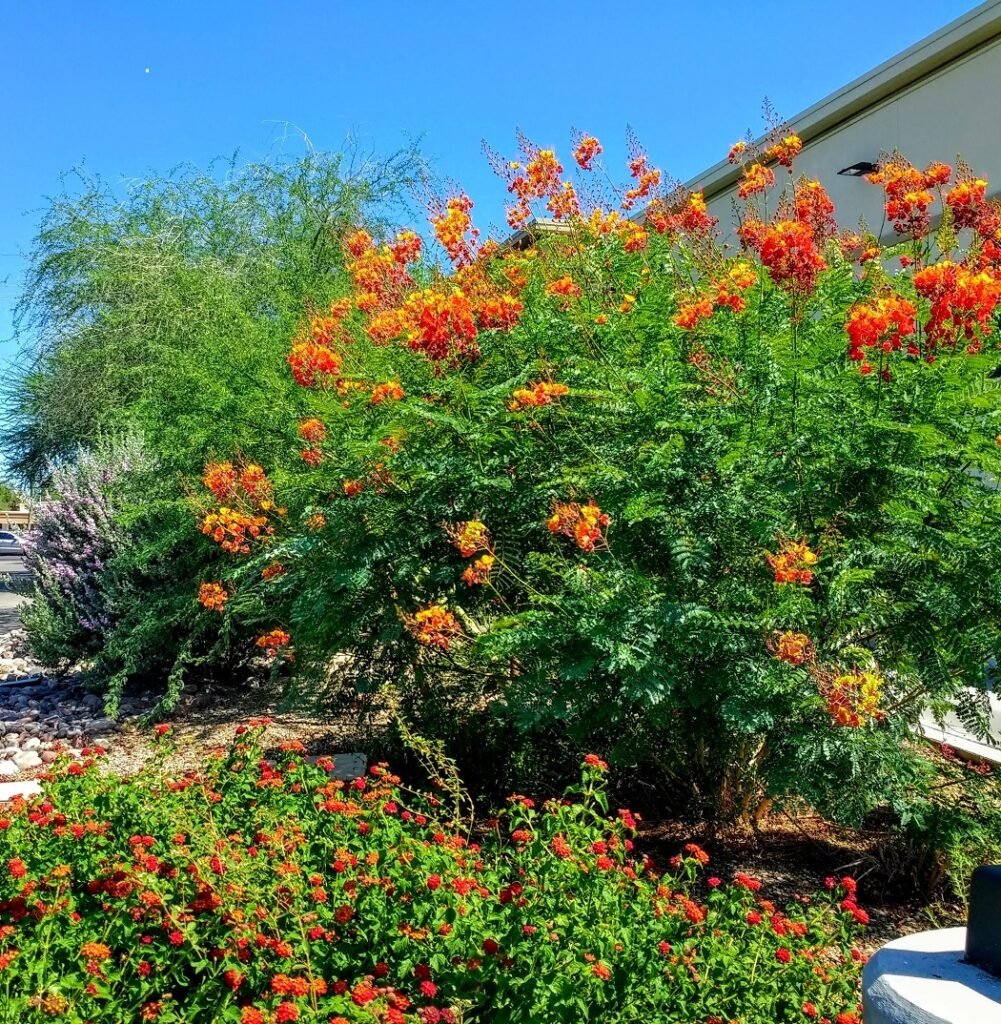
If, for example, someone asks you about best way to maintain a Bird of Paradise (that red/yellow/orange flowering shrub above), you may need to ask some questions. Why? Because just one state to the West in California, there is another plant called Bird of Paradise which looks like a lily that belongs in the tropics and won’t survive in the desert. To give good advice you will have to know exactly which plant they are asking about.
Another plant with a different issue: The smaller purple shrub on the left in this image has multiple names (Texas sage, Texas ranger, Leucophyllum frutescens) and only blooms when the humidity gets high enough. As a Master Gardener you will have to break the news to them that watering it like crazy will NOT bring on the lovely purple flowers. They will have to wait until monsoon humidity arrives.
And these are just two of the many, many types of useful things you could learn in a local Master Gardener program.
After I finished the training and began fielding questions from people who were first-time desert gardeners I decided to share my knowledge beyond Nevada. A total tech novice I developed a successful website about gardening in a hot, dry desert climate to reach would-be desert gardeners around the planet. For that I thank the Clark County Master Gardeners.
How to Join Your Local Program
So, are you ready to master the green world of gardens and share your knowledge with your community? You can find a local program by visiting the American Horticultural Society or checking with your local state university.
To become a Master Gardener typically requires 40 to 70 hours of classroom instruction covering botany, soils, plant pathology, pest management, and sustainable gardening. The fees for the training vary from state to state.
Next comes 40 to 75 hours of community service working with senior Master Gardeners. You would be doing such things as answering questions from callers to the MG help desks, advising school gardens, leading basic gardening classes for adults or managing demonstration plots. Then you will be expected to do 20 to 30 annual volunteer hours to maintain.
And I can tell you that when you join the program you will learn more than names of plants and best gardening practices, you will meet new friends among the Master Gardeners who will endure for a lifetime.
