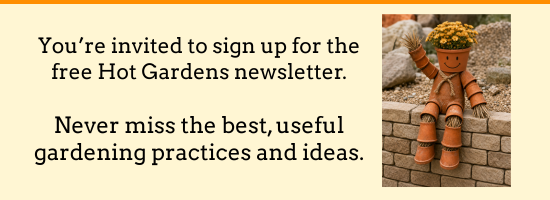
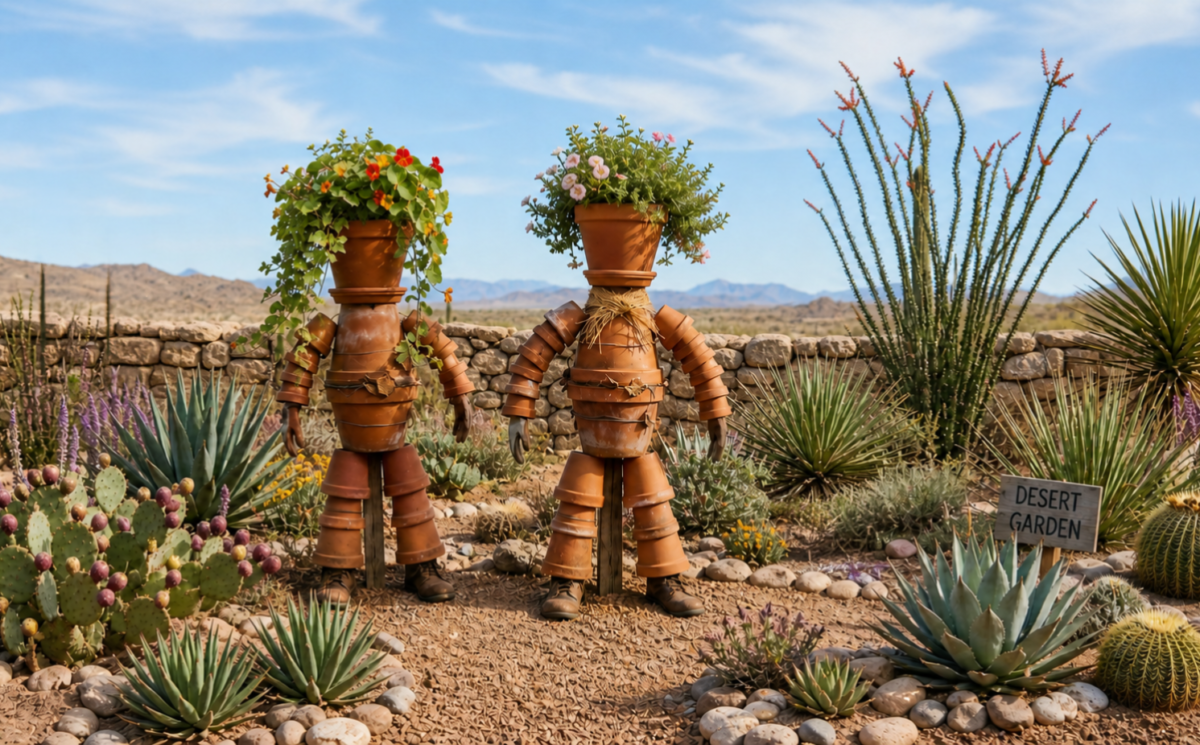
Of course you can do more serious things with terra cotta pots than create PotMen for sculpture in your desert garden which probably looks a bit dull at this time of year. You could create a water-wise plant watering system with terra cotta ollas. Or set up a mini-fountain to provide water for thirsty lizards and birds. Or simply position large painted terra cotta pots — either solid color or elaborately designed–here and there as color in your summer monochrome garden.
But I started with PotMen, at the top of this post, who are funny and silly and, have “heads” that give you a space to grow non-traditional desert plants, such as nasturtiums, ivy and petunias like those sprouting out of the PotMens’ heads. During peak summer heat and peak sunshine those plants would not survive 24 hours, as we all know. But in the shade and in a milder season, growing those colorful flowering plants is do-able. I plant nasturtiums in pots every Spring and they thrive for a while. Meanwhile the PotMen are fun in a garden year ’round. (FWIW, I first saw these characters in Europe, not the U.S. and only found one person online offering instructions on how to make them. They are strung together with cords and propped upright with narrow slats.)
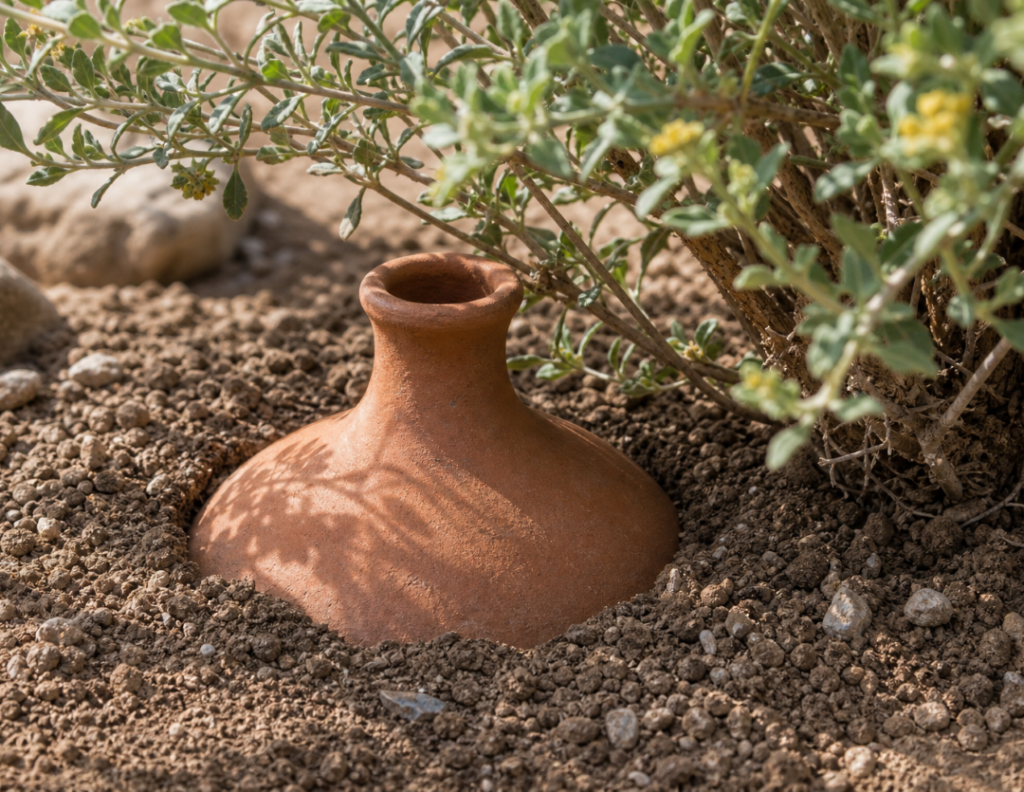
Call ollas “ancient sustainable irrigation”
Terra cotta ollas were created first thousands of years ago in North Africa, or China, or maybe in Spain or somewhere else. While no one can say definitively where it started, we can make a very good guess about “who.” A woman, somewhere, saw water seeping through a clay pot she used to keep water in her home and realized that by sinking a clay pot filled with water into the ground in her garden/fields she could spend less time hand irrigating plants. She realized the water would slowly seep out into the soil and give plant roots the water they need consistently for good growth. All she had to do was refill the pot, now more commonly known as an olla (pronounced Oy ya), every three or four days. She probably also worked with her village potter to refine the design of her “plant-waterer.” They came up with a round clay pot with a narrow neck to help prevent evaporation and a cap on top–also to slow down evaporation. That design is still used today. Ollas can also be created with ordinary clay garden pots. See DIY instructions on You Tube.
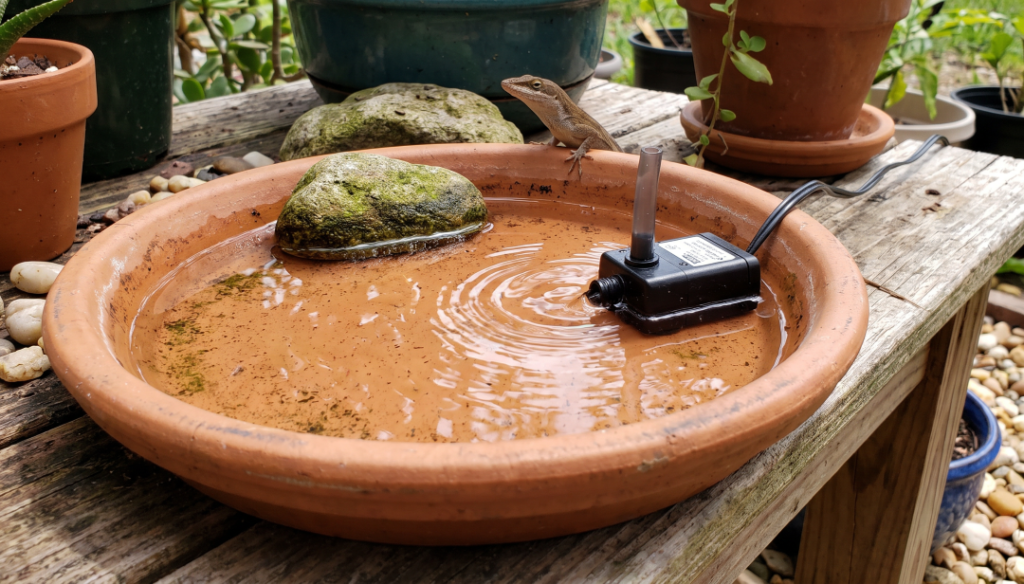
Help a lizard with its drinking habit
When I first set up a plant saucer on my patio and filled it with water it was for the Mourning Doves that live in my neighborhood. And they came and drank and began hatching little doves in the shrubs in my backyard. Success!
A month or so after I set up this mini-bubbler fountain one morning I noticed a little lizard skittering away into the leaf litter. Unlike the doves, the lizard can’t just fly over to the river for water so I continued with this mini-fountain — now more for the lizards than the doves. I have only seen one smaller lizard who could be a baby of the first one, however. In case you want to add this feature to your garden, there are small solar powered bubblers listed online for under $10.
Visit my author’s site to see books I’ve published.
All are now on Kindle Unlimited.
Control the invaders before they take over
Plant aggressive growers—like certain desert mint varieties or invasive succulents—directly into a clay pot, then bury the entire pot into the ground up to its rim. The thick terra cotta walls contain the root system to stop underground runners from taking over your garden beds. Among the aggressors: ice plants (Carpobrotus edulis) and some Sedum. Sedum Angelina is an example: it is golden yellow during summer and golden orange in the fall. It is tempting because of the color, but highly invasive.)
Nope. Find another kind.
If you are thinking about planting the Mother of Thousands, in a pot with other succulents, it will overwhelm and essentially kill the well-behaved succulents. And, worse yet, little Mother of Thousands plants will sprout up all over the place even if the original plant is in a pot. So beware! More about succulents in an upcoming newsletter.
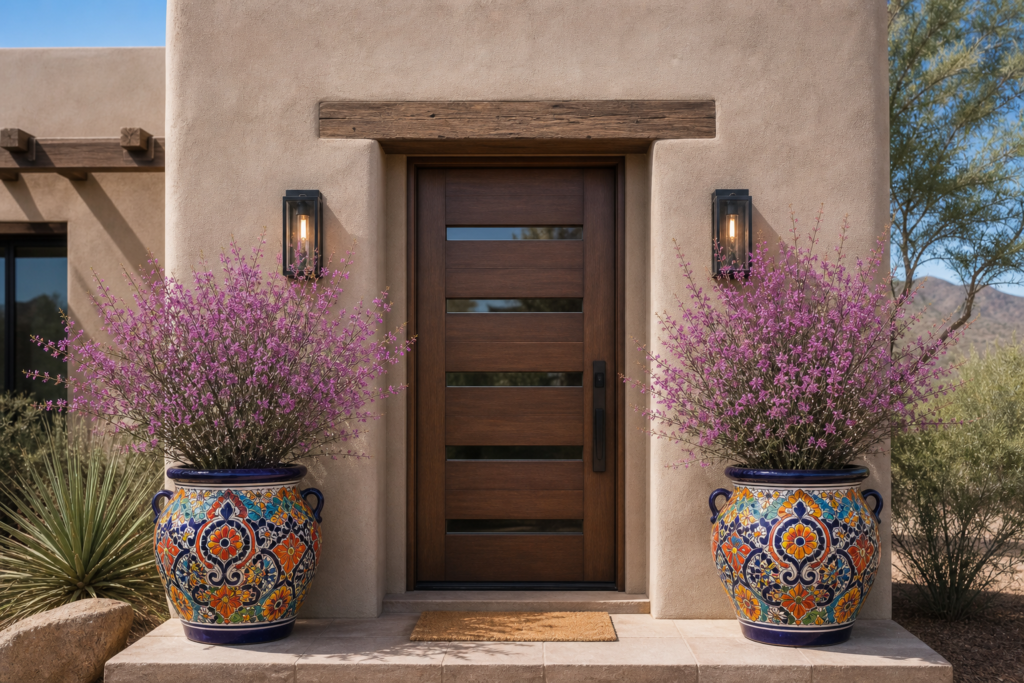
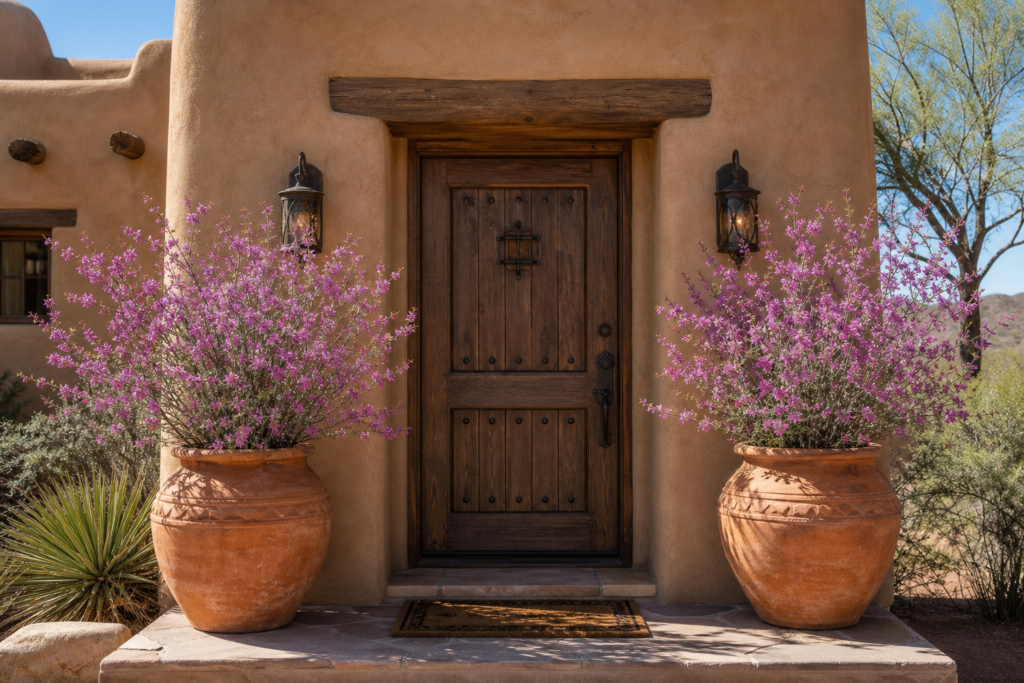
Gorgeous large pots look great by the front door but they are tempting to thieves
Whether a classic adobe or a contemporary Southwest style home, large pots look beautiful beside the doorway. Alas, thieves think so, too. If you want to do this anyway, be sure to affix the pots to the front landing with silicon adhesive and/or by running a cable from the inside of the pot, through a flat washer and then through the hole in the bottom and lock the cable to a railing. Or you may decide to use your beautiful big pots beside the patio behind your home and leave your front door plain. Keep the beauty of terra cotta pots to yourself, your family and your friends.